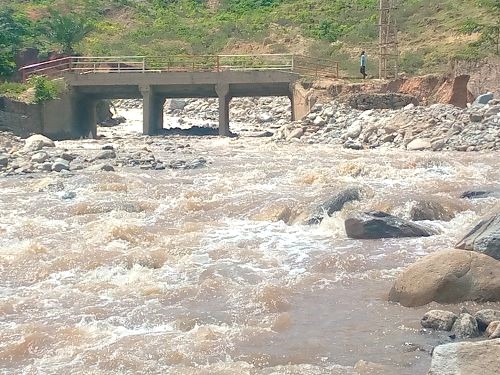
The wrath of the Kirasa River destroys infrastructure and minds
By Gaspard Maheburwa
The Kirasa River separating the Bujumbura and Rumonge provinces caused enormous damage on Gabaniro hill. The latter having experienced an apocalyptic situation in April 2024, part of its population has just experienced another nightmarish event. Public infrastructure, residential houses, domestic animals as well as huge areas of crop fields were ravaged by the Kirasa River in the second half of April 2025. In total distress, local voices believe that it is time to be relocated to leave this place. Same story for climate change experts.
Sunday April 27, 2025, we disembark at Gabaniro, Kirasa sub-hill at 10:30 A.M. Some families are at mass, others are collecting small items of equipment that escaped the floods. The children check the wet documents out of the office of the principal of the Kirasa Basic School.
On the other side of completely wet classrooms, divine songs and preaching by “born aigain” persons are heard. It was the faithful of churches completely wiped out by the surprise flood of Kirasa who kept hope. However, this hope is reinforced by distrust. The latter is based on the fact that these faithful do not know what is really happening in the high mountains of the Muhuta commune. They suspect any noise.
One of the faithful comes out of a classroom where he was participating in Sunday worship. He monitors the eastern sky of this locality to see the color of the clouds. It does not stop there, it heads towards the Kirasa river about ten meters behind the room. Objective: to check if the flow of water in the river has not increased or if it does not present a different color. If the situationis confirmed, his reaction will be to rush to the room to alert his friends so that they can escape.
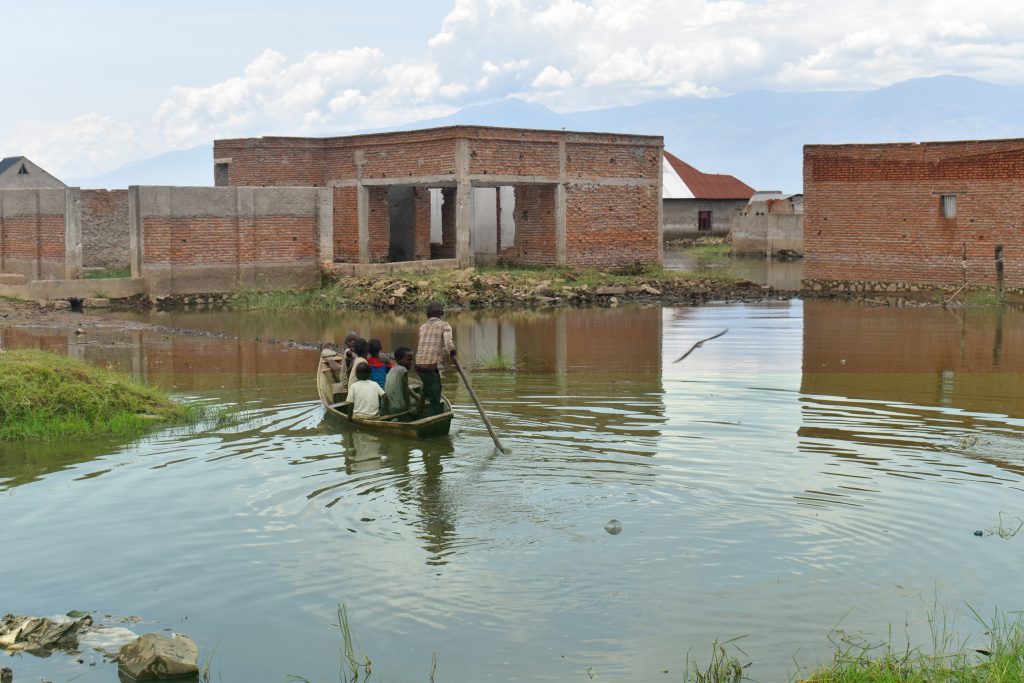
Meanwhile, the Kirasa River presents a chaotic situation around it. Huge quantities of tons of large stones, sand and gravel are deposited everywhere. Kirasa no longer has a corridor. It takes the part it wants. On the face of the church faithful, you can simply read despair.
“How do you feel after this disaster?” , we asked an old man from a church “It’s the end of the world for us,” replies the faithful.
Destroyed or under threat
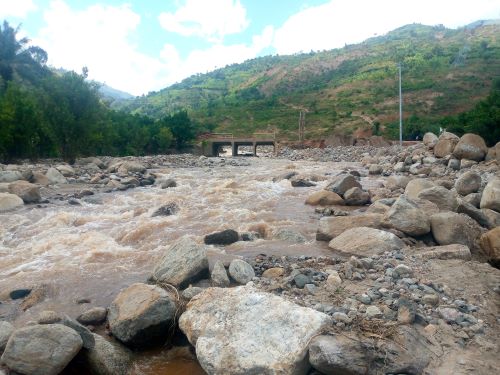
The damage speaks for itself in Kirasa. The National Road Number 3 (RN3) Bujumbura-Rumonge was almost cut into two parts due to violent pressure from water and large stones brought by the Kirasa river. The bridge connecting the Kabezi commune of the Bujumbura province to the Muhuta commune of the Rumonge province is in danger because of this disaster of April 2025. It had previously been destroyed because of the torrential rains which fell on the locality on Thursday May 6, 2021.
The government has sent a caterpillar to try to put things back in order but it will take time given the extent of the damage.
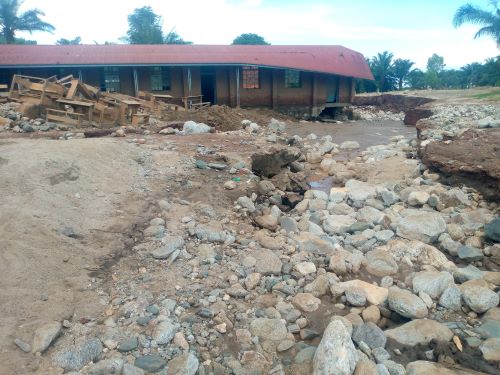
“The damage is enormous at this school. Seven classrooms were flooded, one of which was destroyed and unusable at the moment. This is the room for the 9th Form. Six classrooms are cracked, the management was flooded and several documents were destroyed, 74 desks were damaged”, reports Innocent Nibaruta, Director of ECOFO Kirasa.
This school official also talks about missing desks and rates them at 6.
Sanatius Nahigombeye, head of the Kirasa sub-hill, reports more than eight houses destroyed while reporting missing domestic animals including goats, chickens,…with fields of rice, tomatoes, corn,…”We fear a famine in the days to come”, says Nahigombeye indignantly.
“We had kiosks a few meters from the Kirasa bridge along the road. All the goods were taken away. We are in total desolation and we no longer know where to turn”, complains Seconde Nduwimana , a former saleswoman near Kirasa river.
Churches established in this locality, shops, …. were also completely devastated.
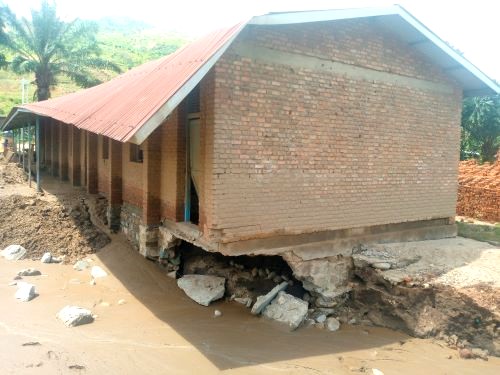
“We fled violent floods without taking anything. Our great concern was for our children who were still in classrooms on the day of the disaster, Wednesday April 16, 2025, in the afternoon,” grumbles Espérance Ndayishimiye, residing in Kirasa very close to the Fundamental School.
According to this resident and administrative sources, the situation worsened on Saturday, April 19, 2025, when Kirasa came on an unprecedented scale to demolish everything in its path. At that moment, the only thing to do was to flee.
Breaking already broken hearts
Sources on site in Kirasa the indicate that most of the affected people are climate refugees from Gabaniro due to the total sliding of their hill under the effect of El Niño .
Humanitarian organizations state that the night of April 19 to 20, 2024, a 4-year-old child lost his life, 375 homes were destroyed and 2,485 people fled the locality, 500 hectares of agricultural crop fields were also damaged as indicated by local administration.
The inhabitants of Gabaniro had not yet forgotten the misfortunes experienced in April 2024. They have just witnessed another natural surprise. They don’t understand why they are always targeted by natural disasters when they already have broken hearts because of them.
“Misfortunes do not let us go. After the collapse of Gabaniro, it is the Kirasa river that surprises us. Our hearts are broken,” says Audace Nzisabira, a resident of Kirasa.
“No one could imagine that even if Kirasa overflowed, the damage could reach the level that it reached,” says a bus driver met in Kirasa and who claims to have been stranded on the day the river overflowed.
Psychologically affected,…
“When the river surprised us, I was in class. We ran collectivelly in the same direction because the water was harassing us too much. I found myself facing death. I’m not at peace in my head. Even if the classrooms are retouched , I will always remember horrible images,” testifies I.M., a schoolgirl from ECOFO Kirasa.
A Unicef report published in 2023 states that in Burundi, 78% of children suffer multiple depravations which will be increased by climate change.In Kirasa, the inhabitants testify that the very sound of the river and the stones it carried away was so frightening that they had to move away from this place.
Etienne Niyonsavye, Pastor of the Fecabu Church in Kirasa reveals that the psychology of the Christians in his church has been affected. “We are not mentally stable. We notice that this hill has indescribable problems that haunt our minds,” he confides.“Every time it rains, I see that Kirasa will come back with his wrath and I move away from the place with my children,” explains Ndayishimiye Espérance.
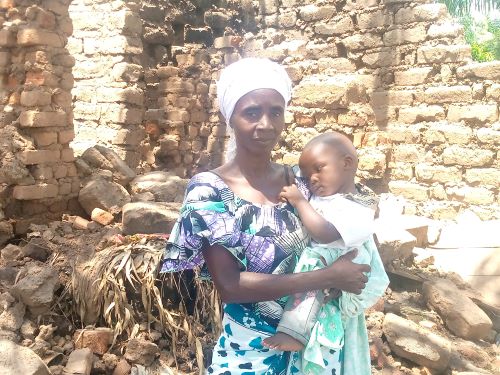
What Kirasaians have in common is this psychological insecurity that they have had for several days. Indeed, according to them, when night falls, they do not sleep. They expect the worst. Some keep money in their phones to ask about the rain situation in the hills upstream every day. They add that their children are no longer studying properly, and “this situation will cause school results to drop”, they warn.This situation, according to them, does not allow them to live harmoniously.
IOM states that Burundi is among 20 countries most vulnerable to climate change because of storms, torrential rains, landslides and flooding which regularly hit the country causing almost 90 percent of internal displacements.
They ask for solutions
Living in a mood of doubt, the population of Kirasa is calling for sustainable solutions to be put in place so as not to live tirelessly in a dead end.Etienne Niyonsavye asks that all stakeholders put energy into protecting the river by providing cleaning services to avoid overflows.
As for Vianney Ngezahayo, protecting the edges of Kirasa as well as the bridge would be urgent solutions to initiate. Curing Kirasa upstream and downstream would also be another solution for him.
However, several local voices are being raised to demand a relocation of the population from this part of the Muhuta commune to other safe places.Experts in environment and climate change advise mapping the entire risk zone and establishing indicator signs.
“It is imperative to make a contingency plan to anticipate places to accommodate victims in the event of such disasters,” advises Dieudonné Niyongendako, a Researcher and expert in environment and climate change issues. This expert also proposes the establishment of a permanent alert system so that residents are evacuated in time.
It should be noted that IOM reports that 59 disasters had been recorded between January and March 2025. According to this NGO, these disasters caused 13,845 damages affecting 69,430 people, including 2,144 displaced by the effects of climate change.







Post Comment